
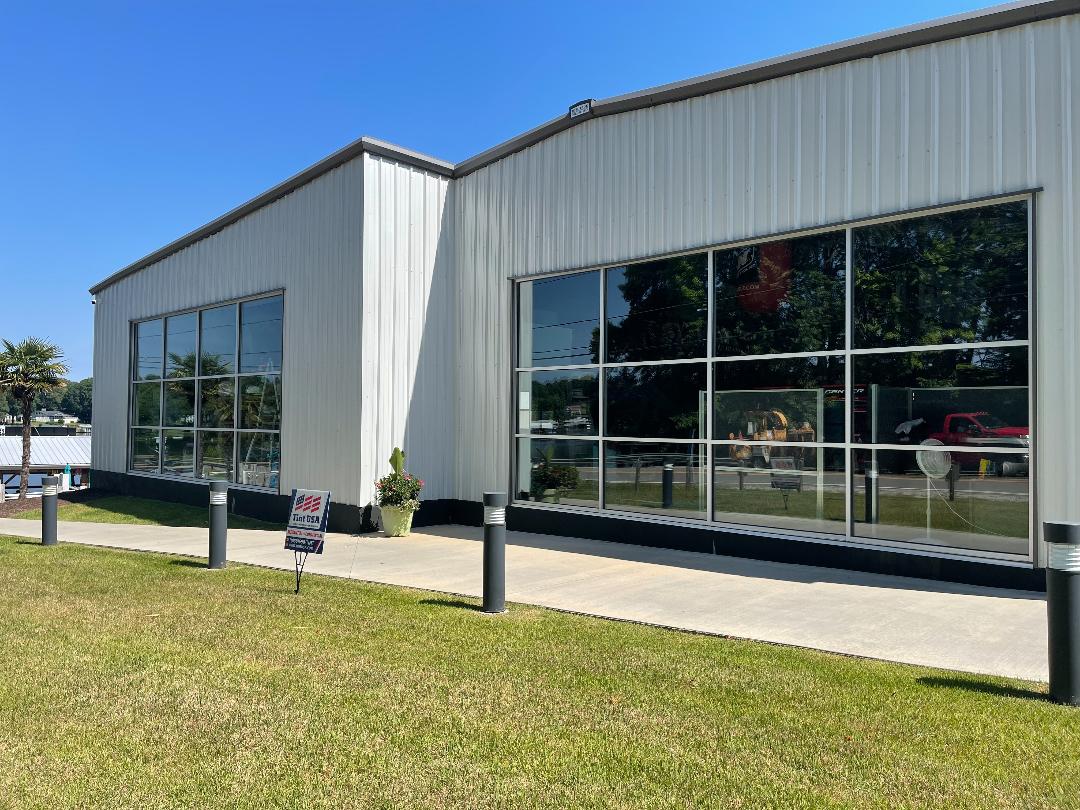
When summer arrives in the Carolinas, warehouse temperatures can climb well past 90°F before noon. That heat drives up energy bills, shortens the life of your HVAC equipment, and puts your workers and inventory at risk.
Table of Contents
Solar control window film is one of the most cost-effective ways to address all three. Here’s how it works in warehouse and industrial settings, what you can realistically expect, and why the numbers usually make sense.
Why Warehouses Run So Hot
Most commercial buildings benefit from insulation, shade, and HVAC systems sized for their glass coverage. Warehouses are different. They tend to have large spans of unobstructed glazing, skylights, clerestory windows, dock doors with glass panels, and full-width glass on attached office areas. Every unprotected pane becomes a heat conductor.
Glass is the weakest link in your building envelope. Unfilmed clear glass transmits the majority of solar energy directly into the space. That means radiant heat hitting the floor, equipment, workers, and stored inventory, with an HVAC system fighting an uphill battle from the moment the sun rises.
The problem compounds through the day. Heat builds in the structure, the floor radiates it back, and by mid-afternoon the system is working at peak demand to hold a temperature it can barely reach.
What Window Film Actually Does
Solar control window film is a thin coating applied directly to existing glass by a professional installer. It works by reflecting and absorbing solar energy before it passes through the glazing, reducing the heat that enters the space.
No glass replacement. No structural changes. No downtime during installation. A professional crew can typically film an entire warehouse in a day or two.
The performance difference is measurable. High-performance solar films block a significant portion of solar heat gain, the energy responsible for temperature spikes near glazed surfaces. Less heat entering the building means your HVAC system cycles less, runs at lower capacity, and holds target temperatures more reliably.
For the areas where heat hits hardest, near dock doors, under skylights, in glazed office annexes, the difference is noticeable within days of installation.
The Energy Numbers
| What the Research Shows | Source |
| Up to 30% reduction in cooling costs (single-pane clear glass, warm climates) | GSA / Lawrence Berkeley National Laboratory |
| 50-75% reduction in solar heat gain | Window Film Fundamentals; National Institute of Building Sciences |
| 2 to 6 year typical payback on energy savings alone | DOE Federal Energy Management Program; GSA |
For warehouses with significant glazing, these reductions translate directly into lower peak demand, more stable interior temperatures and less strain on mechanical systems.
Results vary based on glass type, climate and building use. Buildings with existing double-pane or tinted glass will see more modest savings. When utility rebates are factored in, and many Carolina-area utilities offer prescriptive rebates for solar control film, payback can shorten considerably.
The Cost of Doing Nothing
Energy bills are the visible cost. Three others tend to go unaccounted for.
Your HVAC Is Wearing Out Faster Than It Should
Every time your system cycles on to fight solar heat gain, it accumulates wear. The Department of Energy estimates that roughly one-third of a building’s cooling load comes from solar heat entering through glass. When that load drops, your system runs less, lasts longer, and costs less to maintain.
A single rooftop unit replacement for a large warehouse can run $25,000 or more. Deferring that replacement by a few years generates meaningful ROI on a film installation that costs a fraction of that figure.
UV Is Damaging Your Inventory
Warehouses that store goods near glazed surfaces expose that inventory to ultraviolet radiation. UV accounts for roughly 40% of material fading and degradation. It affects packaging, labels, plastics, textiles, paper goods and light-sensitive food products. In many facilities this shows up as uneven discoloration in packaging or product stored near dock doors and window lines.
Standard commercial property insurance does not cover gradual UV degradation. It is classified as wear rather than a covered event. Every unit of inventory affected by UV exposure is an uninsured loss. Solar control window film blocks up to 99% of UV radiation (varies by film), making it a direct loss-prevention measure alongside its energy benefits.
Worker Heat Carries Regulatory and Liability Exposure
OSHA has made warehousing a priority enforcement sector for heat hazards. Under the General Duty Clause, employers must protect workers from recognized heat risks. OSHA has issued citations under this authority, including willful violations exceeding $100,000.
A proposed federal heat standard is working through the regulatory process. If finalized, it would establish mandatory protocols starting at an indoor heat index of 80°F. Engineering controls, measures that physically reduce heat at the source, are the preferred compliance method under OSHA’s framework. Window film can function as part of an engineering control strategy by reducing heat at the source.
High heat also affects worker output. In environments that require sustained physical activity throughout a shift, elevated temperatures increase fatigue, slow task completion and raise the risk of errors, all of which carry real labor costs independent of any compliance exposure.
What Installation Looks Like
A Tint USA consultation starts with a glass assessment. Film selection depends on your current glazing, your primary goals and the orientation of your building’s glazed surfaces.
From there, our team installs labeled film samples on your actual windows so you can evaluate the result before committing to a full installation. You see the performance on your glass before any decision is final.
Installation is handled by certified technicians with no interruption to warehouse operations. Most commercial solar films come with a 10-year limited manufacturer’s warranty.
Schedule a Commercial Window Film Consultation
If you manage a warehouse or industrial facility in the Charlotte metro area, Concord, Kannapolis, Gastonia, Mooresville, Rock Hill, Fort Mill or anywhere in the surrounding region, Tint USA can assess your glass, show you film samples on your actual windows, and give you a clear performance picture before any work begins.
Get a clear assessment of what window film can realistically do for your facility before the heat season arrives.
Save on Energy Costs
window film for warehouses - FAQs
Will window film make the warehouse too dark?
Modern solar control films are engineered to reject heat without sacrificing natural light. Most high-performance options maintain good visible light transmission while blocking the infrared and UV portions of the solar spectrum that cause heat and damage.
Can film be applied to skylights?
Yes. Skylights are often the highest-heat glazing in a warehouse and respond well to film. Film selection for skylights accounts for pitch angle, glass type and whether the glazing is polycarbonate or tempered glass.
Does window film work on already-tinted glass?
It can, though expected savings are lower than on clear single-pane glass. A glass assessment at the time of consultation determines which films are appropriate and what performance to expect.