
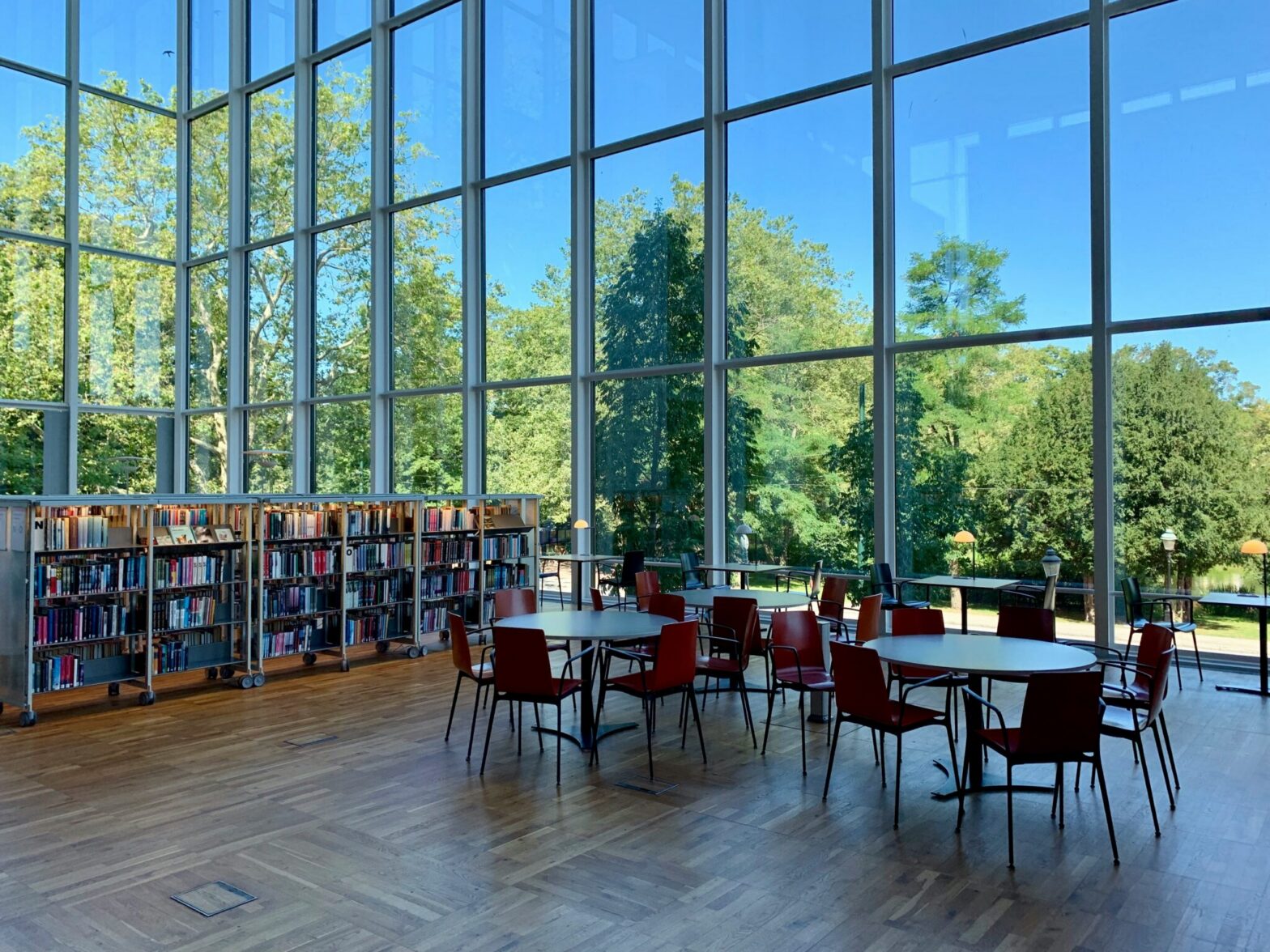
Every school in North Carolina and South Carolina has the same weak point. The locks can be hardened. The cameras can be upgraded. The access control can be modernized. But the glass is still glass.
Table of Contents
Standard windows and glass doors can be breached in seconds. Broken glass scatters into sharp fragments that injure anyone nearby and leave the opening wide open. For school administrators and facility directors, protecting students means addressing the glass, and the best time to install security window film in schools is during summer break. The film needs days of undisturbed curing to reach full strength, the buildings are empty, and the project fits cleanly into district budget and facility upgrade cycles.
Most districts don’t think about timing security film installations until it’s too late to act on it for the current year.
Why Glass Is the Weak Point in School Security
Schools have more glass than almost any other type of public building. Entryways, classroom windows, interior doors, administrative offices, gymnasiums and cafeterias all rely on standard glazing designed for light and visibility, not resistance to impact or forced entry.
That glass fails in predictable ways. An intruder can break through a standard window or glass door in under ten seconds, gaining immediate access to the building. A severe Carolina storm can turn broken panes into airborne debris inside classrooms and hallways. Even accidental impact from a ball, a falling branch, or a hard collision can shatter unprotected glass near students.
The common thread across all three scenarios is the same. Standard glass doesn’t just break. It breaks apart, scattering fragments across the room and leaving the opening completely exposed.
How Security Film Changes the Way Glass Fails
Security window film is a thick, multi-layered polyester film bonded directly to the interior surface of existing glass with a pressure-sensitive adhesive. When the glass breaks, the film holds the shattered pieces together in the frame instead of letting them scatter.
Two major factors change when security film is applied to windows:
- The risk of injury from flying glass drops sharply because the fragments stay adhered to the film rather than becoming projectiles.
- Forced entry slows down because the broken glass remains in place as a barrier.
An intruder who could punch through an unfilmed window in seconds now faces a membrane that has to be cut, torn or peeled away, buying time for lockdown procedures and emergency response.
Security film does not make glass unbreakable—no film does. What it does is change the failure mode from “instant open hole with flying shards” to “cracked but intact barrier that holds its position.” Those extra minutes between a breach starting and help arriving are what security film is designed to provide.
One question facility directors ask during consultation is whether the film provides any protection before it’s fully cured. The answer is yes. The film is physically bonded to the glass from day one and will hold fragments together on impact even during the curing period. Full curing brings the adhesive to its rated bond strength, which is what determines how long the film resists sustained force during a breach attempt. Think of it as the difference between a barrier that holds under a single strike versus one that holds under repeated, deliberate attack.
For a deeper look at film mechanics, see our guide on how security window film works.
Why Summer Break Is the Optimal Time for Security Film Installation
Every school that decides to install security film hits the same scheduling question: when can we actually do this without pulling students out of classrooms? Summer break solves that problem, as well as a few others that are less obvious.
The Film Needs Weeks to Reach Full Strength
After application, the adhesive between the film and the glass goes through a curing process where it strengthens from an initial bond to its full rated performance. For thicker security-grade films (8 mil to 14 mil), that process takes 30 days or more. Film thickness, glass type, temperature and humidity all affect the timeline.
Carolina summers actually help here. Warmer temperatures accelerate curing, and consistent conditions through long daylight hours keep the process steady.
If film is installed during a short break like winter or spring recess, the curing period extends into active school days. During those critical first weeks, the adhesive is more vulnerable to disruption. A backpack leaned against freshly filmed glass, a custodian cleaning windows on the normal schedule, a student pressing a hand against the surface—any of those can compromise the bond before it sets. A busy school hallway is not the environment this product needs during its most vulnerable phase.
Summer break in the Carolinas runs 10 to 12 weeks. That provides time for installation across multiple buildings, full curing, and a comfortable buffer before students return in August.
Facility Upgrade Cycles Favor Summer
Most school districts plan and execute facility upgrades over summer. Maintenance teams and procurement offices are already in project mode, running HVAC work, roof repairs and interior renovations. Security film fits into that cycle without creating a separate coordination effort.
Many districts operate on a July-to-June fiscal year. A summer installation can be scoped, approved and completed within a single budget cycle, avoiding the complications of projects that span fiscal years. For districts using grant funding, summer timelines also align with common disbursement schedules.
There’s a procurement angle too. Starting the consultation in spring gives the district time to get quotes, route approvals through the school board and align the project with other planned improvements. Districts that wait until June to begin the process often find the installation itself getting pushed to August, which compresses the curing window right up against the first day of school.
Empty Buildings Mean Better Installations
Security film installation requires unobstructed access to every window. Installers clean the glass, apply the film, trim and inspect. In a classroom with 30 desks pushed against the walls, that means clearing the window area completely.
During the school year, that means pulling students out of rooms, rearranging furniture, working around bell schedules and fire exit testing. Over summer break, crews move through a building systematically without any of that. The result is faster work, cleaner application and a stronger bond.
What a Multi-Building School Installation Looks Like
Every campus is different. A single-story elementary school with 20 classroom windows is a fundamentally different project from a multi-building high school with entryways, interior office glass, gymnasiums and hundreds of panes across three or four structures.
Tint USA has scoped and completed multi-building security film installations for school districts across the Charlotte region and the Carolinas. The process follows a consistent sequence.
- On-site glass assessment. A Tint USA representative visits the campus to identify and meter every window and glass door in scope. Single-pane, double-pane, tempered and laminated glass each have specific compatibility requirements. Metering the glass first prevents the kind of mismatches that happen when an installer shows up with one product and applies it to everything.
- Project scoping. The district receives a detailed scope covering which buildings are included, what film is recommended for each glass type, how installation will be phased and what the timeline looks like. Multi-building campuses are typically sequenced building by building so completed sections begin curing while work continues elsewhere.
- Installation. The crew arrives with materials pre-cut and staged. Glass surfaces are cleaned, film is applied, edges are trimmed and each pane is inspected. A typical classroom takes 30 to 60 minutes depending on window count and size.
- Curing. Small water bubbles or a slight haze may appear after installation. This is normal and clears as the adhesive reaches full bond. For installations completed in June, the film is fully cured well before the first day of class.
If your district wants to start the scoping conversation, you can request a campus assessment at any point in the planning process.
What Happens When Districts Wait Until Fall
The case for summer becomes sharpest when you look at what happens when districts miss the window.
A district that starts the process in August or September faces compressed timelines across the board. The curing period overlaps with active school operations. Students are leaning against windows, custodians are cleaning glass on schedule, daily foot traffic creates vibration. The adhesive still cures, but the environment is working against it.
Scheduling gets harder. Installers work around class periods, bell times and occupied rooms. A project that would take a straight week over summer stretches across multiple weeks of partial-day access.
Budget complications multiply. The project may span two fiscal years. Federal grant programs like SVPP and STOP operate on annual application windows, and state safety grants in NC and SC are typically announced once per cycle. A district that isn’t scoped and documented before those windows open can lose an entire year of funding eligibility.
In short, waiting creates three problems at once:
- Film cures in a high-traffic environment where the bond is more likely to be compromised
- Installation stretches across weeks of partial-day access instead of a clean, continuous schedule
- Grant and budget windows close, pushing funding to the next fiscal year or cycle
For many districts, pushing to next summer means another full school year with unprotected glass at every entry point.
Planning Your Summer Installation Month by Month
Most school districts that complete summer security film projects follow a similar sequence.
Early to mid-spring is when the conversation starts. The district reaches out, and the Tint USA team visits the campus to assess glass types and building scope. Procurement teams should be pulling together grant applications and budget approvals during this window.
Mid to late spring is when the project scope is finalized, materials are ordered and installation dates are confirmed. After May, availability becomes limited as other schools and commercial projects fill the schedule.
June through July is installation. Crews work building by building while classrooms are empty.
July through early August is curing. The film reaches full bond strength undisturbed, with summer heat working in its favor.
August is when students return to stronger glass across every entry point, fully cured and performing at rated strength.
Funding Security Film Through Grants
Cost is the most common reason school districts delay security film. But security window film qualifies as a physical hardening measure under several federal and state grant programs, the same category as reinforced doors, access control systems and ballistic-rated barriers.
At the federal level, the School Violence Prevention Program (SVPP), run by the DOJ’s COPS Office, provides up to $73 million annually with individual awards up to $500,000. Security film falls under the program’s category for “any other measure that may provide a significant improvement in security.” Districts contribute a 25% local cash match, though the COPS Office can waive that for applicants with severe financial need.
The STOP School Violence Act, administered through the Bureau of Justice Assistance, allocated $83 million in its FY25 round with awards up to $2 million (Category 1) and $1 million (Category 2).
At the state level, North Carolina’s Center for Safer Schools has distributed more than $150 million in school safety grants since 2018, including a $35 million round in early 2024. The program funds safety equipment and is administered through the NC Department of Public Instruction.
South Carolina’s Department of Education allocated $20 million in school safety grants for 2024-2025 and proposed $120 million in its 2026 budget to establish permanent school safety and facility funding.
For facility directors planning ahead: The federal SVPP window for FY25 closed in June 2025, but the program reopens annually. NC and SC state rounds are typically announced in fall or winter. Starting project scoping now positions your district to submit a grant-ready proposal when the next cycle opens.
Tint USA provides the project documentation, performance specs, manufacturer data sheets and scope information districts typically need for grant applications. Having those materials ready before the window opens is often the difference between funded and missed.
From Our Team on the Ground
“Summer break is the ideal window for this kind of work. The campus is empty, the crew can move efficiently, the film cures cleanly, and the attachment system gets installed without a single student or teacher affected. When school starts back up in August, everything looks exactly the same — the protection is there, it just isn’t visible. The sales cycle typically runs a few months, so the earlier the conversation starts, the smoother the project goes. We work with administrators, contractors, and glass companies — whoever brings us in, the goal is always the same: be done before the bell rings.“
— Mike Minor, Partner, Tint USA
Schedule a Summer Installation
Summer break is the window, and it’s shorter than most districts expect once you account for scheduling, installation and curing. Every week of delay after May compresses that timeline. Districts across the Charlotte metro and the Carolinas are making the same calculation right now.
Tint USA works with school districts throughout the greater Charlotte area, including Concord, Gastonia, Mooresville, Fort Mill and Rock Hill, as well as districts across North Carolina and South Carolina. Our team handles campus assessment, film selection, project scoping, grant documentation support, installation and post-install inspection.
If your district is planning security upgrades for this summer, request a campus assessment and we’ll provide a clear scope, timeline and the documentation your team needs for budget approval or grant applications.
Frequently Asked Questions About Security Film for Schools
How Thick Is Security Window Film for Schools?
Security films for school applications typically range from 8 mil to 14 mil. The thinner end of that range provides fragment retention and basic impact resistance. The thicker end provides greater forced-entry delay. The right choice depends on the glass type, the frame system and the level of protection the district is targeting. Tint USA's consultation includes glass metering to match the correct film to each window.
Does Security Film Change the Way Windows Look?
Most security films are optically clear. Students, staff and visitors won't notice a visible difference. Some films carry a slight tint that also reduces heat and glare, but the primary function is protection.
Can Security Film Be Installed on Tempered Glass?
Yes. Security film works on tempered, annealed and laminated glass. The application method and film product may differ by glass type, which is why the glass assessment comes before any installation.
How Long Does Installation Take for a Full Campus?
A single building with 20 to 40 windows typically takes one to two days. Multi-building campuses may require a phased approach over one to two weeks. Tint USA provides a detailed timeline during project scoping.
Does Security Film Stop Bullets?
No. Security film is not a ballistic solution and should not be purchased as one. It helps hold shattered glass in the frame and can slow forced entry, buying time for lockdown and response. That is a meaningful layer of protection, but it is not bulletproofing.
Is Security Window Film Permanent?
It's designed as a long-term installation. Most commercial safety and security films carry manufacturer warranties. Removal is possible but requires professional techniques to avoid damaging the glass.
What Happens When Filmed Glass Breaks?
The glass cracks but stays adhered to the film, remaining in or near the frame instead of scattering. This reduces injury risk from flying fragments and maintains a partial barrier across the opening.
Can Security Film Be Combined with Other Film Types?
In many cases, yes. Some security films also provide UV protection and heat reduction. Tint USA can recommend combination products where a single film addresses both safety and comfort. See our overview of hardening soft targets with window film for more on layered approaches.
How Does a School District Get Started?
Contact Tint USA to schedule a campus assessment. A representative visits to meter glass types and evaluate scope. You receive a project proposal covering film recommendations, phasing, timeline and cost. Once approved, installation is scheduled around your summer calendar. The full process typically takes four to eight weeks from first call to completed installation.