
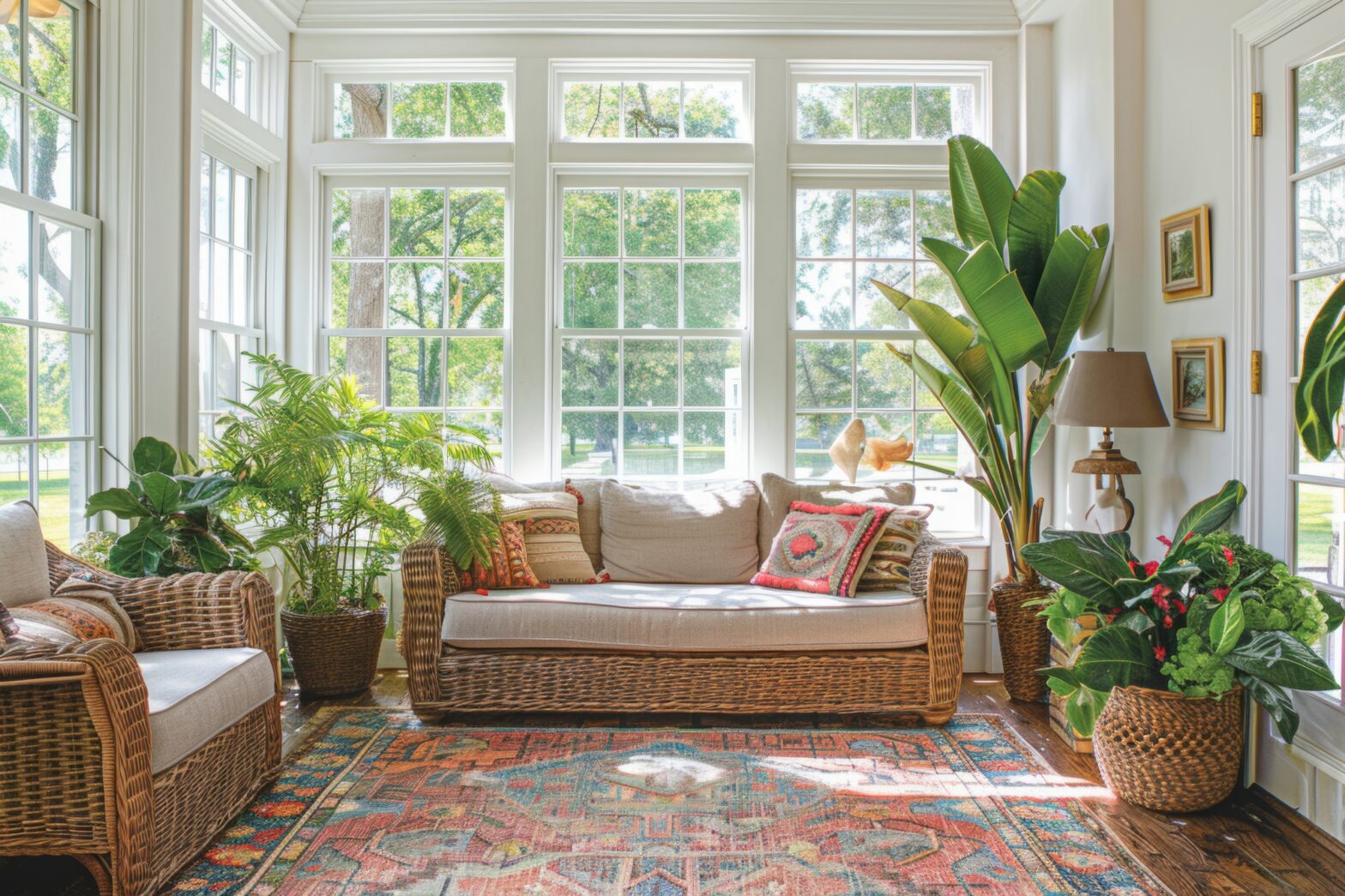
You built a covered patio or sunroom to spend more time outside. Instead, you’re avoiding it from May through September because stepping in feels like opening an oven door.
The glass panels, sliding doors, and roof glazing that make those spaces feel open are also pulling in solar heat from every angle, with none of the overhang protection your interior windows get. By midsummer in the Carolinas, the space is too hot to use and too expensive to ignore.
Covered patio window film is one of the most effective ways to reduce that heat without changing how the space looks or functions.
Why Patios and Sunrooms Get So Much Hotter Than the Rest of Your Home
Polycarbonate roofing and tempered glass panels make patios durable but trap heat efficiently. Screened enclosures with motorized glass panels face the same problem the moment the panels close. The geometry of these spaces works against you in ways a standard window does not.
Can Window Film Be Applied to Patio and Sunroom Glass?
Yes. Covered patio window film can be applied to most glass and enclosure panels, but it has to be matched correctly to the material. That matching step is what a professional consultation handles before any film is selected.
This matters because patio surfaces vary more than standard residential glass. Some panels carry low-e coatings. Others are thinner or structured differently than double-pane insulated glass. The right film for a fixed glass enclosure panel may not be the right film for its sliding doors.
A proper consultation identifies those variables and recommends film that performs well without voiding glass or panel warranties. Tint USA installs labeled film samples on your actual windows before you commit, so you can see the difference in your specific space.
For a full look at how solar film is selected and installed, see our residential solar window tint page.
How Covered Patio Window Film Reduces Heat, Glare and Fading
Heat. Solar control film reduces the amount of solar energy passing through glass before it reaches the interior. A properly matched film can help reduce heat gain significantly, making the space usable during hours you’d previously given up on.
Glare. South- and west-facing glass produces harsh reflected light that makes reading or conversation uncomfortable. Film diffuses that light without darkening the space or blocking the view.
Fading. Solar film blocks up to 99% of UV rays (varies by film). In a patio or sunroom, everything is absorbing direct sun. UV protection does not reverse existing fading, but it significantly slows new damage. That matters for everything in the space that takes direct sun:
- Outdoor rugs and area rugs
- Cushion and upholstery fabric
- Wicker, rattan and wood furniture
- Composite or hardwood decking near glass panels
That’s a real return on a space you’ve invested in furnishing.
To learn more about residential solar film options or schedule a free consultation, visit our residential solar window tint page.
How Covered Patio Window Film Compares to Shade Sails and Outdoor Blinds
Most patio shading products get chosen because they’re fast and cheap to install, not because they’re the best long-term fit for the space.
Shade sails and roller blinds work, but they solve the problem by blocking the view rather than treating the glass. You’re trading your open patio for a space that feels more like a tent.
Film keeps the view intact. Light still comes through, and your patio space still connects to the yard. You’ve just blocked the process where the glass turns the whole enclosure into a heat trap.
There’s a durability difference, too. Outdoor shading products wear out faster in Carolina heat and humidity. Film is installed once and performs without maintenance. See how that comparison plays out on a window-by-window basis in our post on window tinting versus blinds.
Choosing the Right Covered Patio Window Film for Your Space
Choosing the right covered patio window film depends on how your space is built, how it’s oriented, and which glass or panel type you’re working with. Your installer will walk you through the options, but here’s what drives the recommendation:
| Factor | What It Means for Your Patio |
| Visible light transmission (VLT) | How much light passes through. Lower VLT means more heat rejection and a slightly darker look. Higher VLT keeps the space brighter with less heat rejected. Most patios land somewhere in the middle. |
| Heat rejection rate | How much solar energy the film keeps out. Varies by product and glass type. Your installer meters your glass to match the right film. |
| Warranty | Most residential solar films come with a 10-year limited manufacturer warranty. Coverage varies by product, so ask specifically about what’s being recommended for your application. |
The most useful thing you can do before deciding is let an installer assess your glass, explain what’s compatible, and apply labeled samples to your actual panels. Seeing the performance difference on your own glass removes most of the guesswork.
What to Expect from the Results
The improvement you notice will depend on how your patio is oriented, how much glass it has, and which film is installed. A heavily glazed west-facing sunroom in Charlotte will see a more dramatic shift than a partially enclosed porch with one fixed panel.
What most homeowners find after installation is that they get back time in the space. Morning hours that were unusable in July become comfortable again. Late-afternoon use that felt like an October luxury becomes realistic through the summer. The space works for more of the year because the glass is no longer the limiting factor.
Schedule a Free Estimate for Your Patio or Sunroom
If your covered patio or sunroom is sitting unused through most of the summer, it’s worth finding out what film can do for it, and now is the time to schedule your installation.
Tint USA serves homeowners throughout the greater Charlotte region, including Concord, Huntersville, Matthews, Mooresville, Fort Mill, Rock Hill and surrounding communities. Our residential window film specialists will assess your glass, explain your options and give you a clear picture of what to expect before any work begins.